Case study
Climb & Conquer
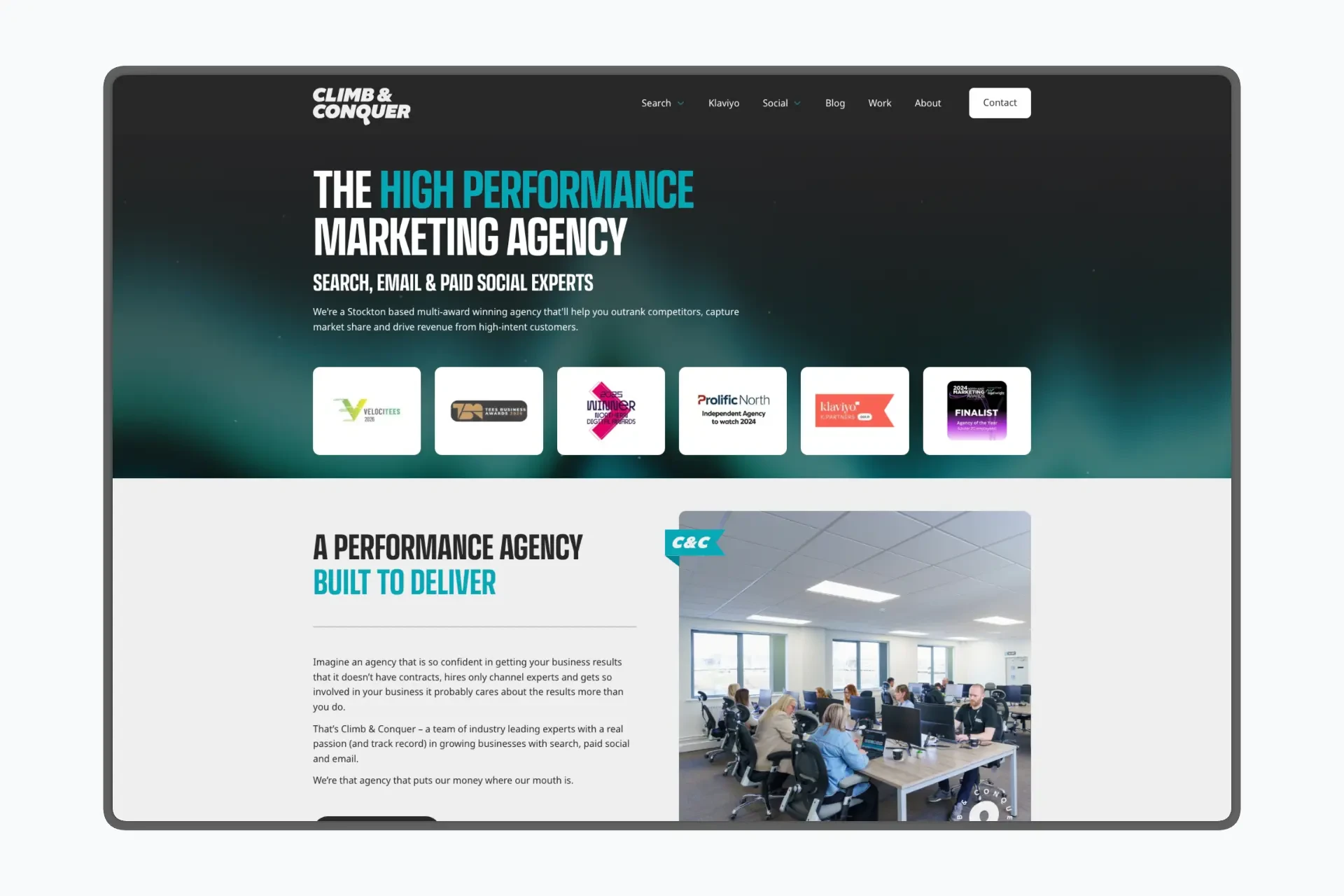
Multi-award winning SEO and paid media agency based in Stockton. Deep service pages, case studies with real metrics, and a site built to practise what they preach.
The problem
Climb & Conquer had outgrown their website. The v1 site did a job when the agency was smaller, but as they picked up household-name clients and industry awards, the site no longer reflected where the business was. It looked dated, it was hard to update, and it wasn’t doing what an SEO agency’s own site should do — rank, convert, and prove the team knows what they’re talking about.
They needed a v2 that matched the calibre of their work. Content-heavy, performance-focused, and something they could manage themselves without calling a developer every time they won another award.
The approach
The site was designed externally and handed over to me as static designs. My job was to turn a complex, ambitious design into a WordPress build that the Climb & Conquer team could actually manage day-to-day.
The biggest challenge was the layouts. The design used decorative vector shapes, rotated photography, overlapping elements, and conditional content blocks — sections that changed their visual treatment depending on what the client filled in. The same flexible layout might render with a Google SERP mockup and stat overlays on one page, then team photography with branded corner badges on another. All driven by the same set of ACF fields.
Getting that right in a way that didn’t break when the client swapped content around was the trickiest part of the entire build. Every layout needed to handle any combination of content gracefully — not just the specific examples in the design file.
The Climb & Conquer team manages all content, case studies, and service pages independently.
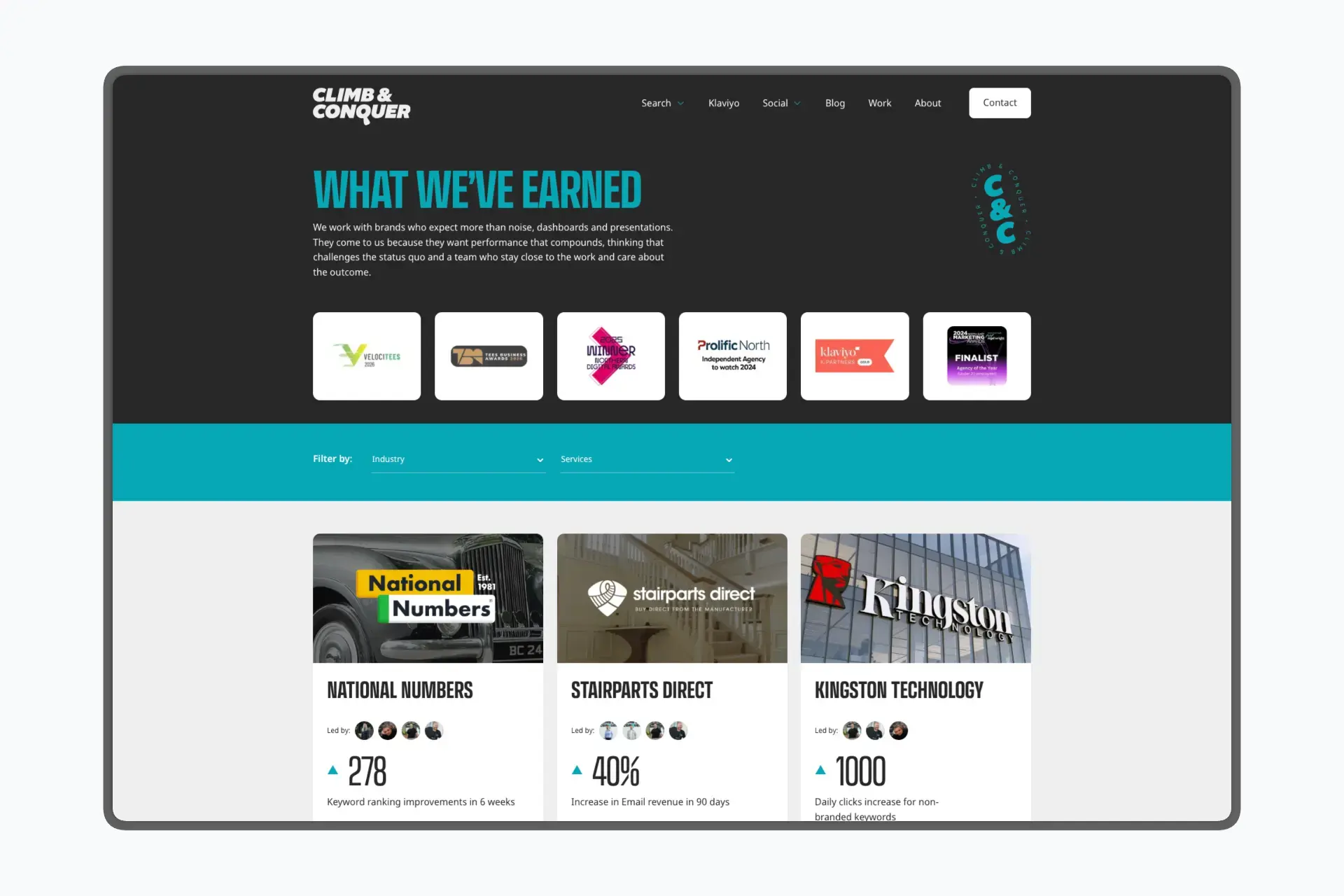
Case study archive with award badges, industry and service filters, and client result highlights
The build
The site runs on WordPress with ACF Flexible Content handling the heavy lifting. Every service page, case study, and landing page is built from a shared set of layouts that adapt based on what content is populated. Vector shapes show or hide. Image treatments change. Stats appear when numbers exist and collapse cleanly when they don’t.
Performance mattered — this is an SEO agency’s website, so anything less than fast would be embarrassing for both of us. The front end is custom PHP and SCSS with no page builder overhead. Lazy loading, optimised asset delivery, and clean markup throughout.
Post-launch, the team manages everything themselves. New case studies, service pages, blog posts, award badges — they handle it all without needing me. They only get in touch for structural changes, like when they wanted a mega menu adding. That was always the goal: build it properly once so it runs itself.
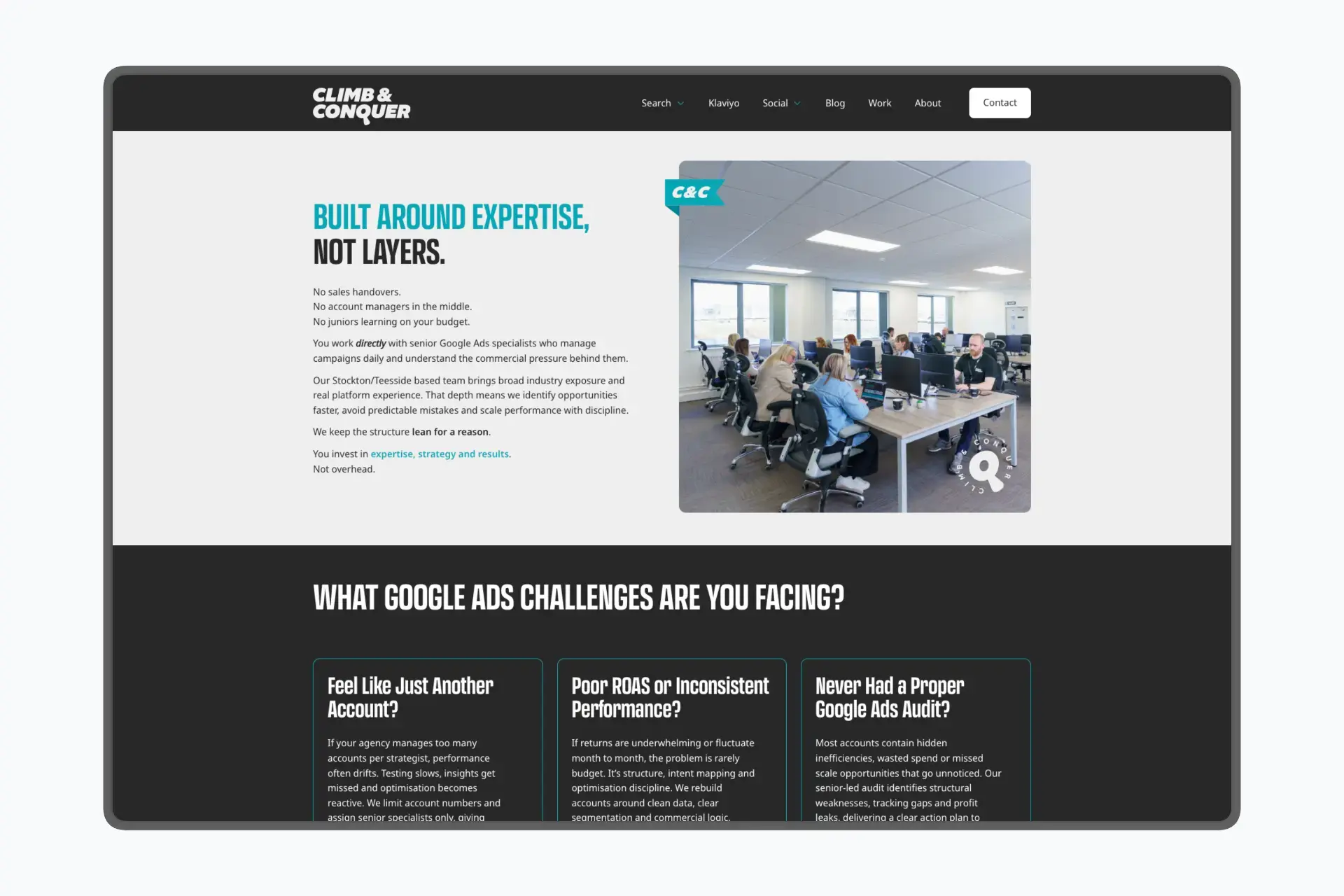
Service page with conditional layout adapting content blocks, team photography, and challenge-based sections
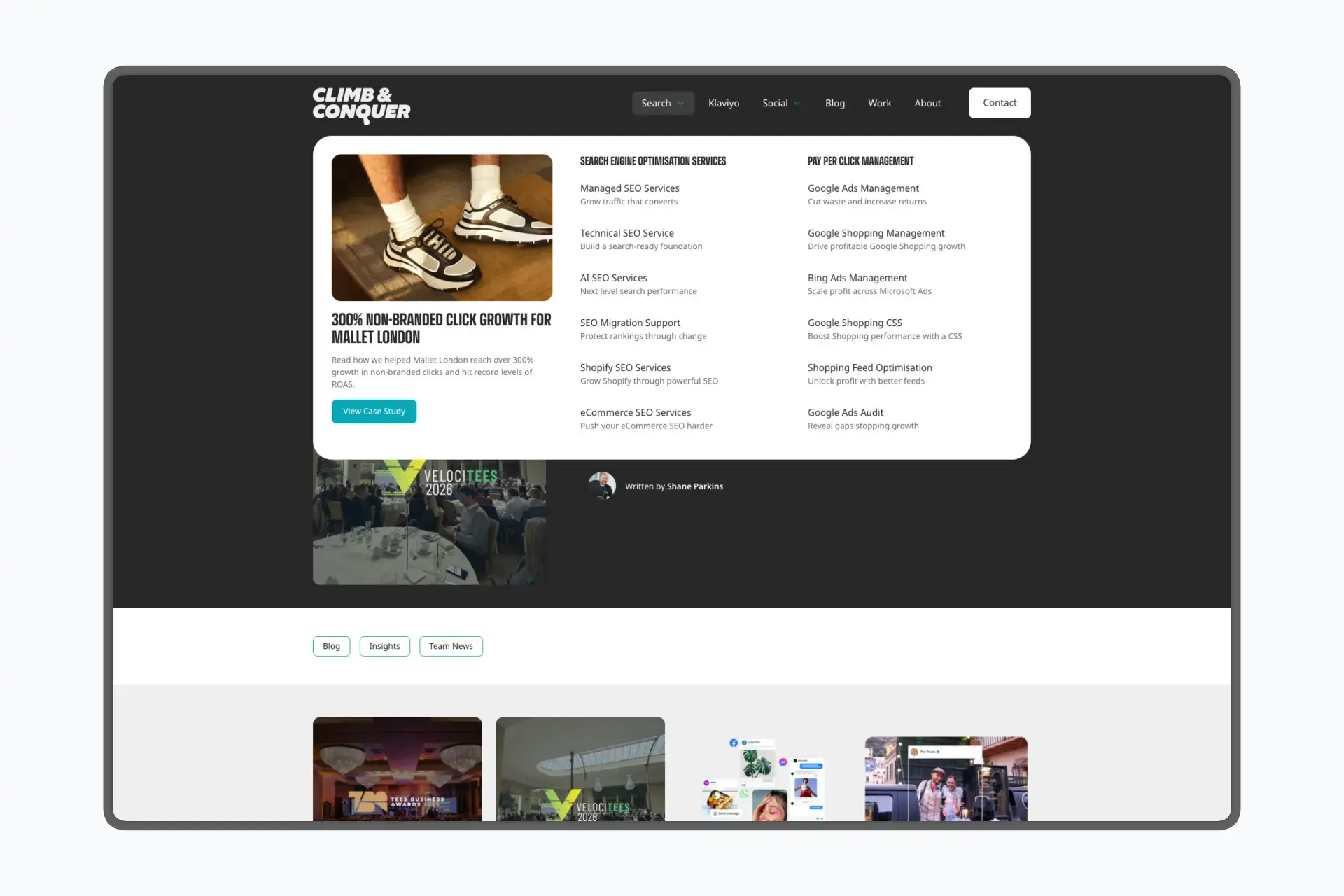
Mega menu with featured case study, service links, and social guides — added post-launch at the client's request
What it's built with
WordPress with ACF Pro and Flexible Content for layout management, custom theme built with PHP and SCSS, conditional layout logic handling vector placement and content-driven visual treatments, hosted on Kinsta.